
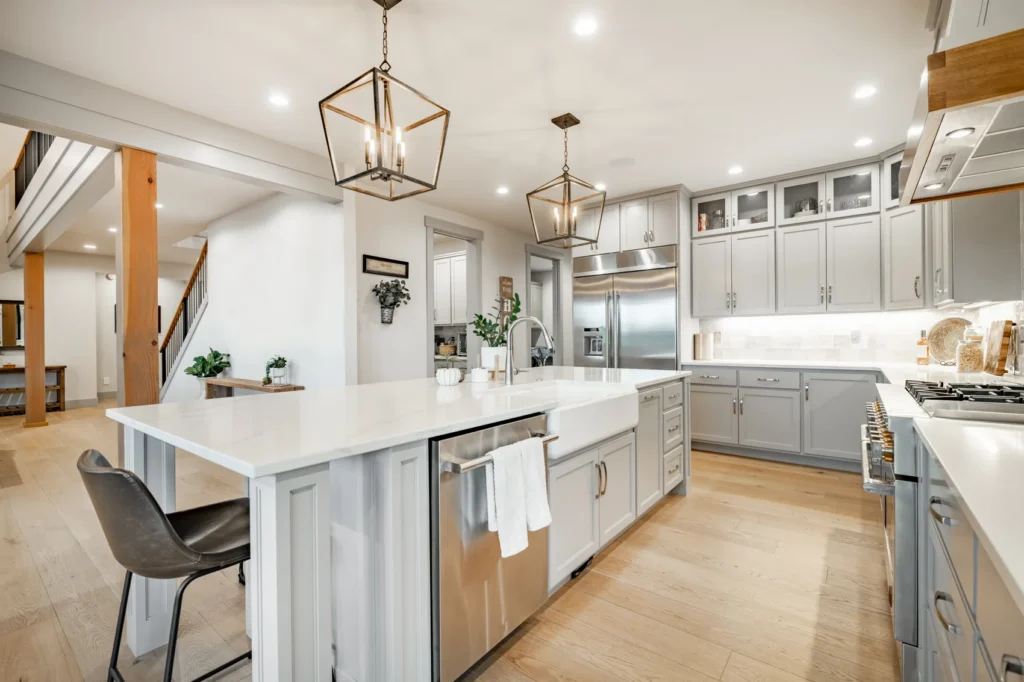
How lighting impacts mood, color accuracy, and everyday comfort
Most people think about lighting after every other design choice has been made: the cabinets, the paint, the flooring, the fixtures. But lighting isn’t a finishing touch. It’s the element that determines how all those other choices look once you’re living in the space. That’s why professionals talk about the science of lighting rather than simply “picking fixtures.”
When thoughtfully designed, lighting brings out depth in colors, highlights texture, and makes a room feel comfortable and usable. If it isn’t, even the most beautiful remodel can feel flat or strangely off.
At Fox Electrical Inc., we’ve walked into so many dark kitchens where homeowners invest in high-end materials but underestimate how light interacts with those surfaces.
Lighting design isn’t decoration. It’s physics, perception, and practicality working together.
A Tulsa kitchen transformation that shows what lighting can really do
One of our recent projects started with a kitchen built in the 1970s, a time when many homes relied on a single, harsh fluorescent soffit box for illumination. The homeowners were updating their layout and finishes, but the space still felt dim and dated because of the lighting.
We reworked the room with a layered approach:
- Recessed lights for general brightness
- Task lighting under the cabinets
- Directional lighting inside the shelving
- Soft flow of toe kick lighting around the island and base cabinets
Each area was placed on its own switch so the homeowners could adjust the room for cooking, entertaining, or winding down.
The centerpiece was a backlit onyx countertop using a concealed light mat. When the homeowners flipped that switch for the first time and saw the stone glow from within, they understood instantly how dramatically light can change a space.
The cabinets looked richer. The backsplash had dimension. Even the appliances looked more refined. Nothing about the finishes had changed. Only the lighting.
If you’re planning a remodel that includes new lighting, it’s often a good time to consider electrical upgrades. You’ll avoid having to open your walls again later.
Why lighting changes the way you see color and mood
Light controls how paint reads on the walls and how natural or artificial materials appear throughout the home. Warm LEDs can make a room feel calm and inviting. Cooler temperatures can sharpen detail but can also make a space feel clinical if they’re used carelessly. Direction, spread, and brightness all play a role in how your brain interprets the colors around you.
For homeowners unfamiliar with Kelvin ranges, the U.S. Department of Energy offers helpful lighting principles, including a general recommendation of 2700-3600K for indoor lighting. It’s not a rule, but it’s a reliable starting point when trying to understand why certain bulb colors feel more comfortable than others.
Most homeowners don’t think about this interaction until something looks “off.” The wall color seems different at night. The granite looks dull. The tile looks busier than expected. Often, the materials aren’t the problem. The lighting is.
Common lighting mistakes (and why they matter)
- Not enough light: shadowy rooms and poor function
- Mismatched color temperatures: inconsistent appearance and mood
- Beautiful fixtures with poor illumination: aesthetics without usability
- Outdated or poorly placed fixtures: distorted colors or uneven lighting
And no one wants Jennifer sneaking up on their porch in the dark to swap out bulbs. If you find a giant box of lights on your porch, you’ll immediately know who’s responsible. LOL
Ready to rethink your home’s lighting? Fox Electrical Inc. can help you design a plan that works for the way you live.
Where homeowners struggle most with lighting
Kitchens and bathrooms
Remodeling often reveals just how little light older homes were built with. In these rooms, shadows become a challenge, whether you’re reading a recipe, putting on makeup, shaving, or trying to prep food safely. One misplaced light can change the entire feel of the room.
There’s also a familiar moment many people relate to: the stray chin hair you somehow miss at home but notice immediately in the car mirror. That’s not your eyesight failing; that’s poor lighting.
Living rooms and bedrooms
New builds often come with minimal built-in lighting. Without layering, you end up guessing whether your socks match or relying on lamps that do little more than create a pool of light in one corner.
If a space ever feels “too bright,” that usually has a simple fix. Use a baffle, adjust the light’s direction, or install a dimmer rather than replace the fixtures altogether.
Entertaining vs. everyday living: The lighting should shift with you
Effective lighting design adapts to your lifestyle. During daily routines, you need enough illumination to move comfortably and see what you’re doing. When entertaining, the lighting shifts toward softer, warmer tones.
In a theater or game room, for example, we often include toe kick lighting along seating platforms. Add wall sconces that keep the room relaxed and a bit of directional lighting where your equipment sits. The space works because the lighting supports its purpose.
For anyone starting a lighting plan from scratch, Fox Electrical Inc. provides professional indoor and outdoor lighting services that help you understand what your space truly needs.
When clients hesitate, then change their minds
Homeowners sometimes hesitate to make lighting upgrades, often due to budget constraints. But once they see the finished space, they understand the impact. Lighting has a way of elevating everything else in the room.
People will spend thousands of dollars on cabinets or countertops but overlook the lighting that showcases them. If the lighting is wrong, all of those upgrades lose their impact. That’s why planning lighting early in a remodel matters so much.
While planning lighting improvements, many homeowners also take the opportunity to safeguard their electrical system with whole-home surge protection. It’s a smart pairing when upgrading fixtures and circuits.
Where builders cut corners (and why it costs homeowners later)
Some builders design only for code compliance, not for real-life use. That often results in dark corners, insufficient outlets, poorly placed can lights, or exterior fixtures that don’t suit the homeowner’s lifestyle.
Fixing those issues later means cutting into drywall, siding, masonry, or tile. That work is far more expensive than getting it right the first time. Soffit lighting, exterior receptacles, and well-planned directional lighting are much easier to install during construction.
What every homeowner should know about the science of lighting
Lighting may be the most underrated design element in a home. People notice the pretty pendant or chandelier. But the real impact comes from the decisions you don’t see:
- Placement
- Temperature
- Brightness
- Switching
The way light interacts with every surface in a room doesn’t just brighten it. It defines it.
When lighting is designed well, your home feels warm and intentionally put together. When it’s an afterthought, the entire space suffers. No matter how expensive the finishes are.
Lighting is the jewelry of your home. It’s what brings everything together and makes the space come alive.
Transform your home with appropriate lighting. Whether you’re updating a single room or planning a complete remodel, thoughtful lighting design changes everything. Let Fox Electrical Inc. show you how.